The CTAO’s Expected Performance
The plots on this page represent the preliminary performance expected from the CTAO following the completion of its construction phase with the approved “Beta Configuration,” as obtained from detailed Monte Carlo (MC) simulations of the facility.
The “Beta Configuration” for the southern and northern arrays of the CTAO, located at the Paranal Observatory (Chile) and Roque de los Muchachos Observatory (Spain) respectively, consists of:
CTAO-North Array: 4 Large-Sized Telescopes and 9 Medium-Sized Telescopes (area covered by the array of telescopes: ~0.25 km2)
CTAO-South Array: 2 Large-Sized Telescopes, 14 Medium-Sized Telescopes and 37 Small-Sized Telescopes (area covered by the array of telescopes: ~3 km2)
Expected Beta Configuration Performance Plots
All performance estimates shown on this page are derived for observations at a zenith angle of 20 degrees.
The differential sensitivity shown below is defined as the minimum flux needed by the CTAO to obtain a 5-standard-deviation detection of a point-like source at a zenith angle of 20 degrees, calculated in non-overlapping logarithmic energy bins (five per decade). Besides the significant detection, we require at least ten detected gamma rays per energy bin, and a signal/background ratio of at least 1/20. The analysis cuts in each bin have been optimised to achieve the best flux sensitivity to point-like sources. The optimal cut values depend on the duration of the observation, therefore the performance curves are provided for three different observation times: 0.5, 5 and 50 hours.
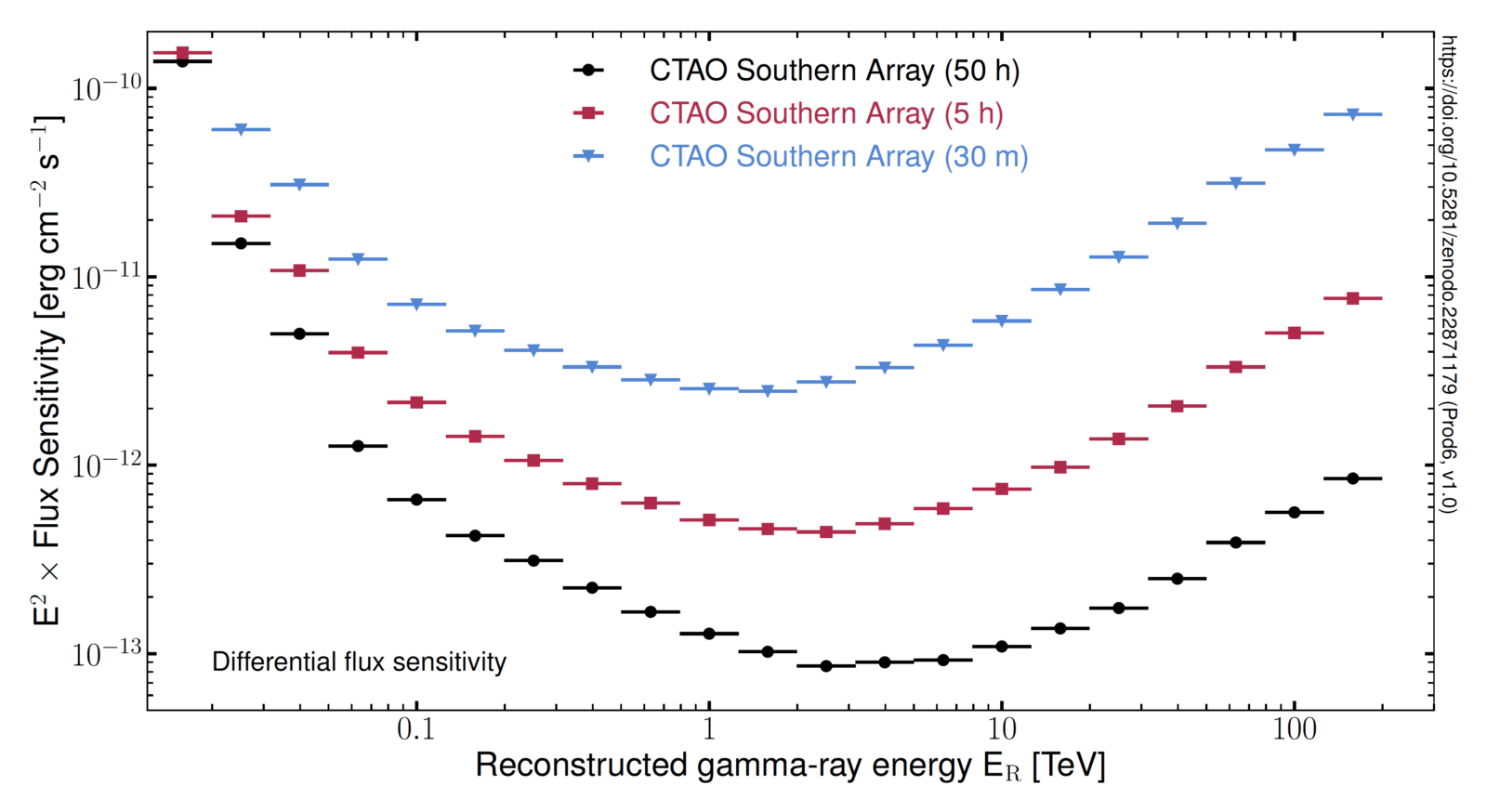
CTAO-South Array
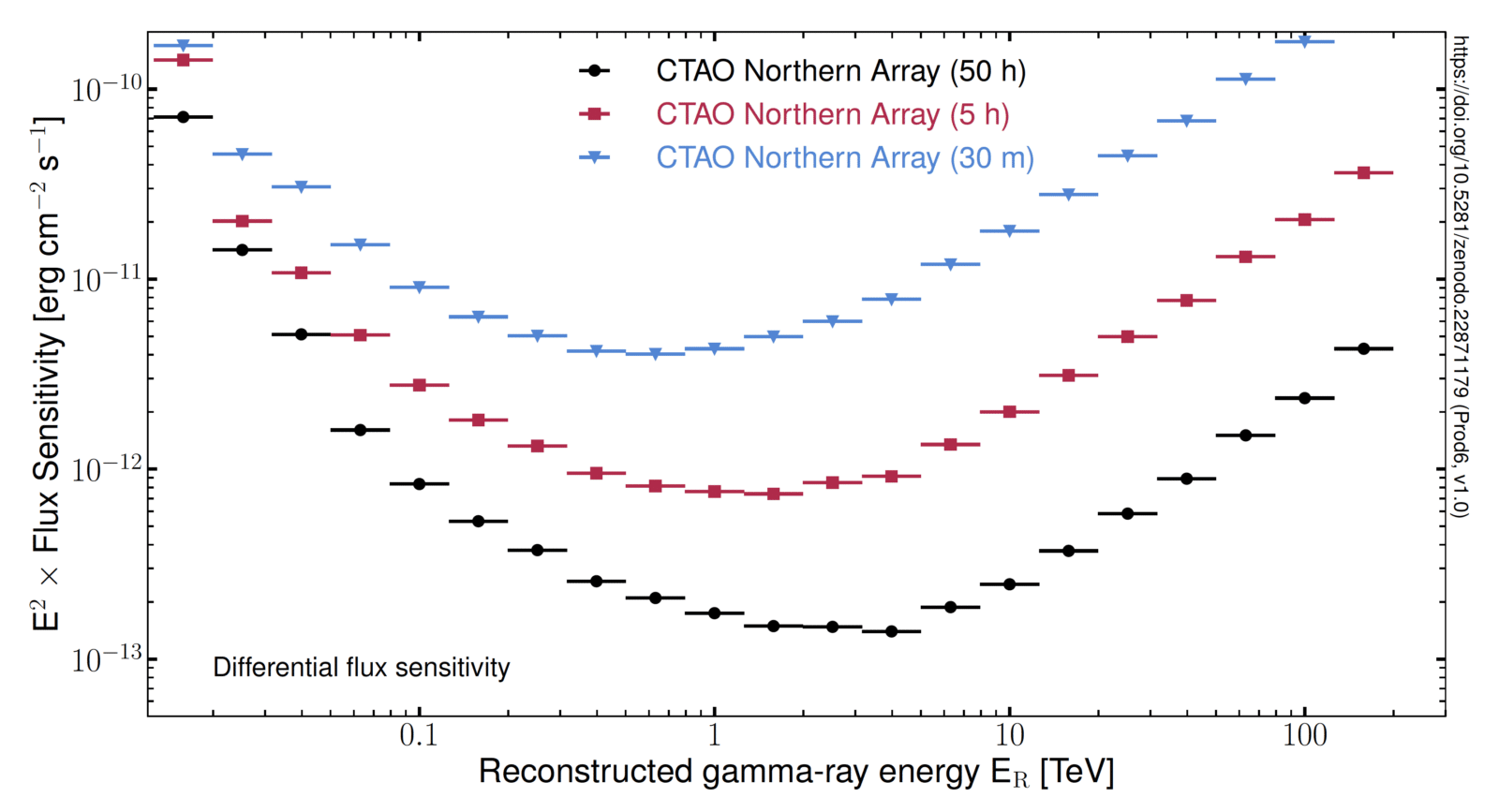
CTAO-North Array
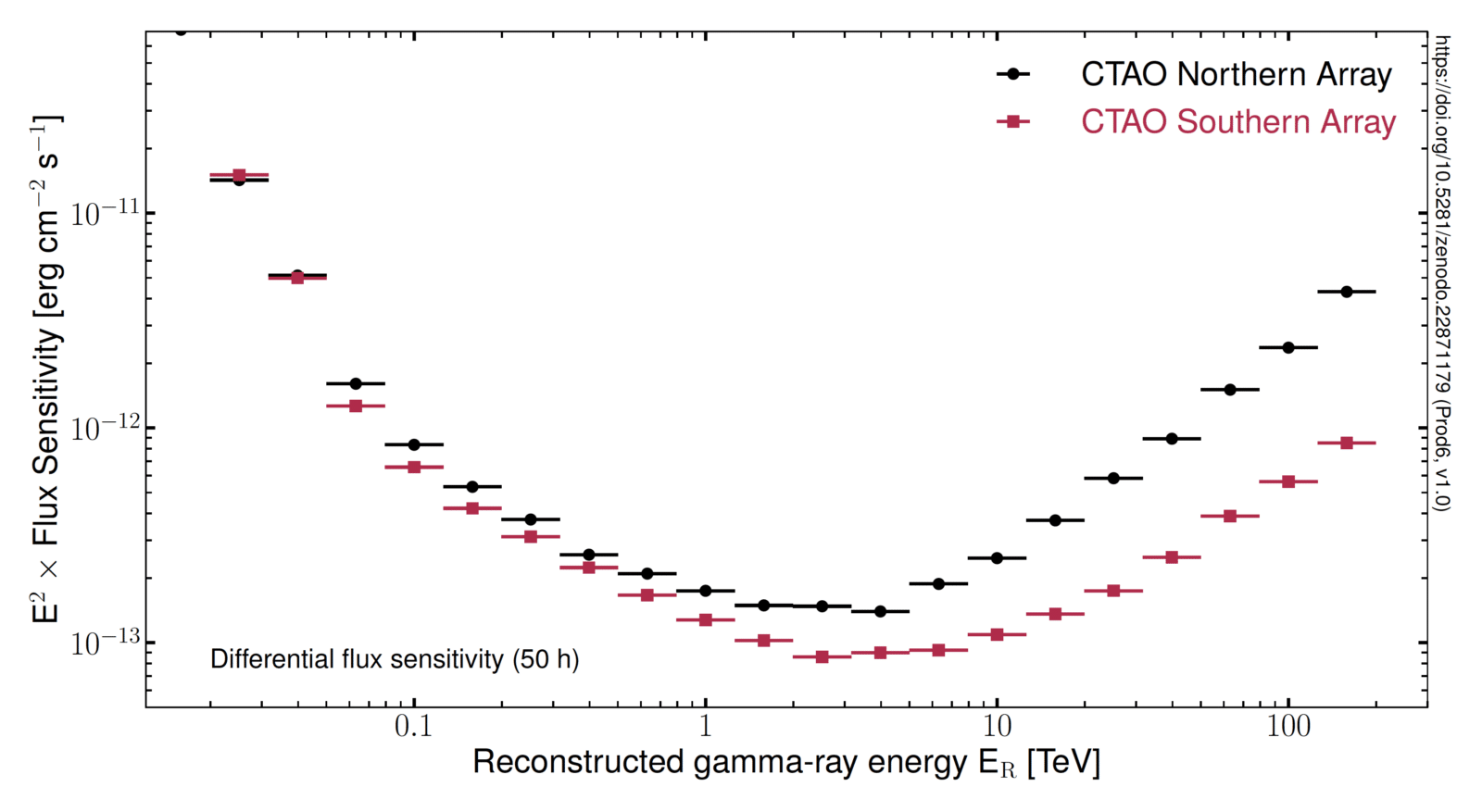
CTAO Arrays Comparison
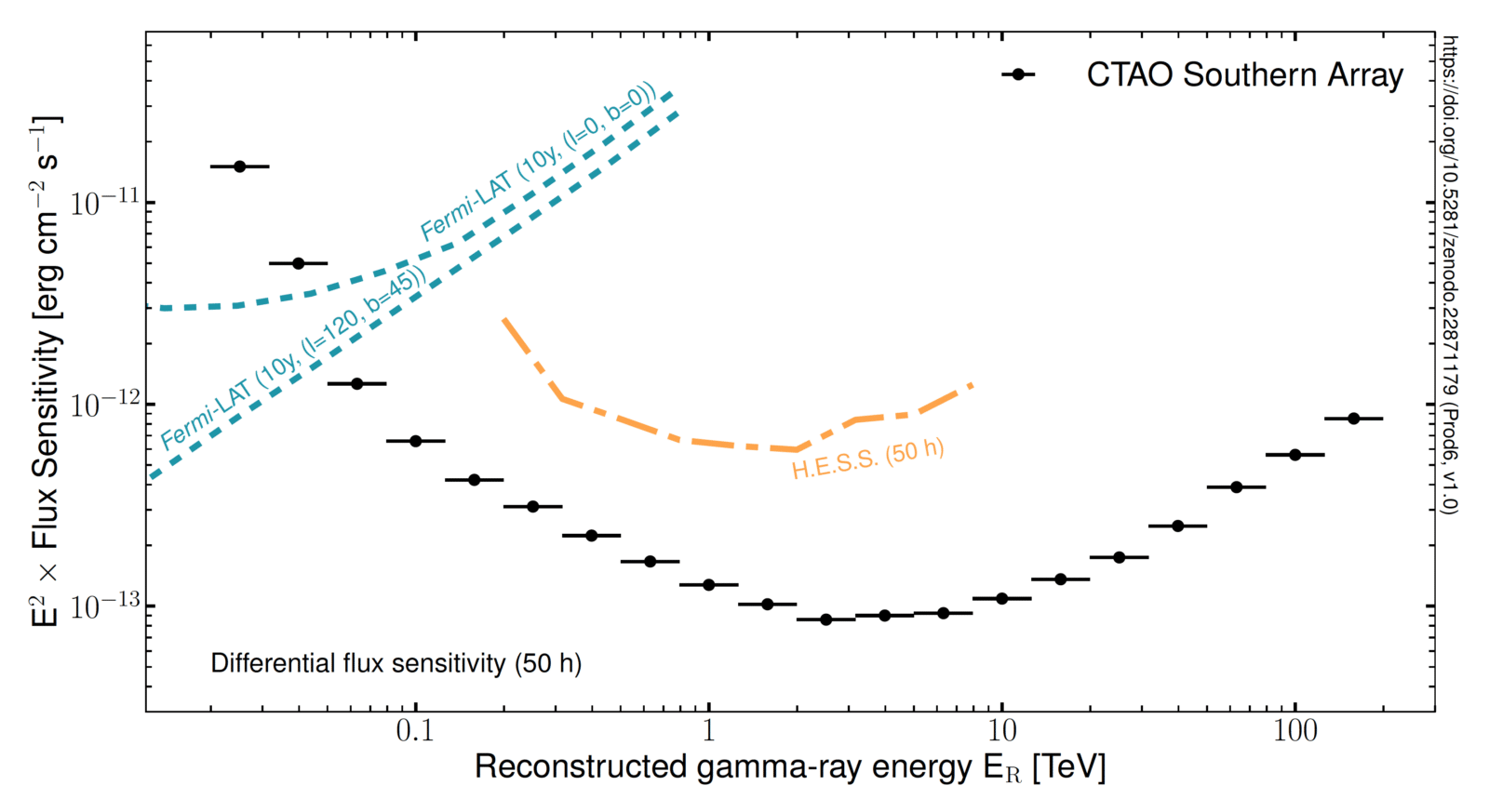
CTAO-South Array vs Other Instruments
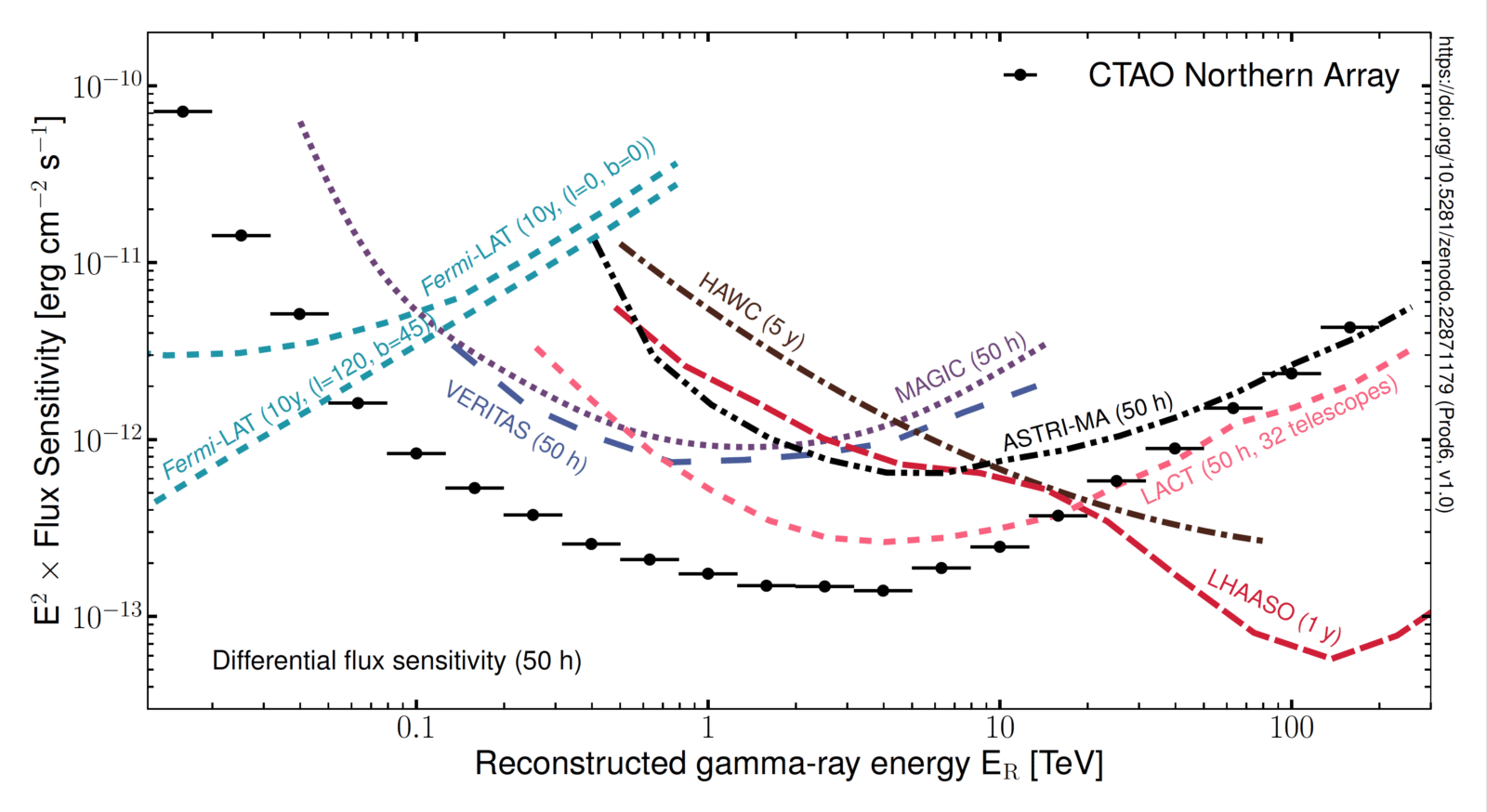
CTAO-North Array vs Other Instruments
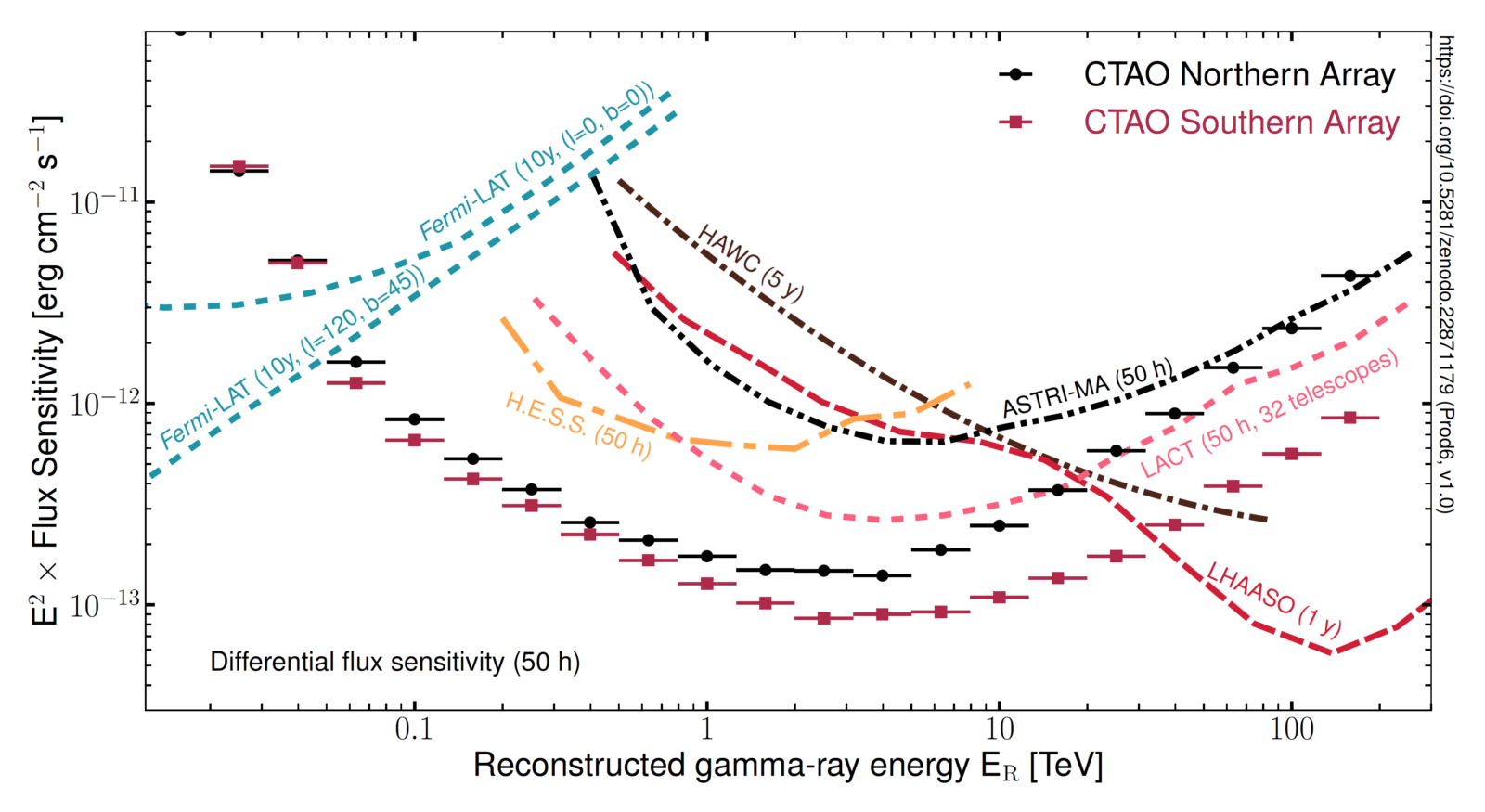
CTAO Arrays vs Other Instruments
Note that the curves for Fermi-LAT, HAWC, VERITAS and LHAASO are scaled by a factor 1.2 relative to the references (see below), to account for the different energy binning. The curves shown allow only a rough comparison of the sensitivity of the different instruments, as the method of calculation and the criteria applied are not identical. In particular, the definition of the differential sensitivity for HAWC is rather different due to the lack of an accurate energy reconstruction for individual photons in the HAWC analysis.
Differential flux sensitivity of CTAO at selected energies as function of observation time in comparison with the Fermi-LAT instrument (Pass 8 analysis, extragalactic background, standard survey observing mode). The differential flux sensitivity is defined as the minimum flux needed to obtain a 5-standard-deviation detection from a point-like gamma-ray source, calculated for energy bins of a width of 0.2 decades. An additional constraint of a minimum of 10 excess counts is applied. Note that especially for exposures longer than several hours, the restrictions on observability of a transient object are much stricter for the CTAO than for the Fermi-LAT. The CTAO will be able to observe objects above 20 degrees elevation during dark sky conditions. The differential flux sensitivity shown below are for observations at a zenith angle of 20 degrees.
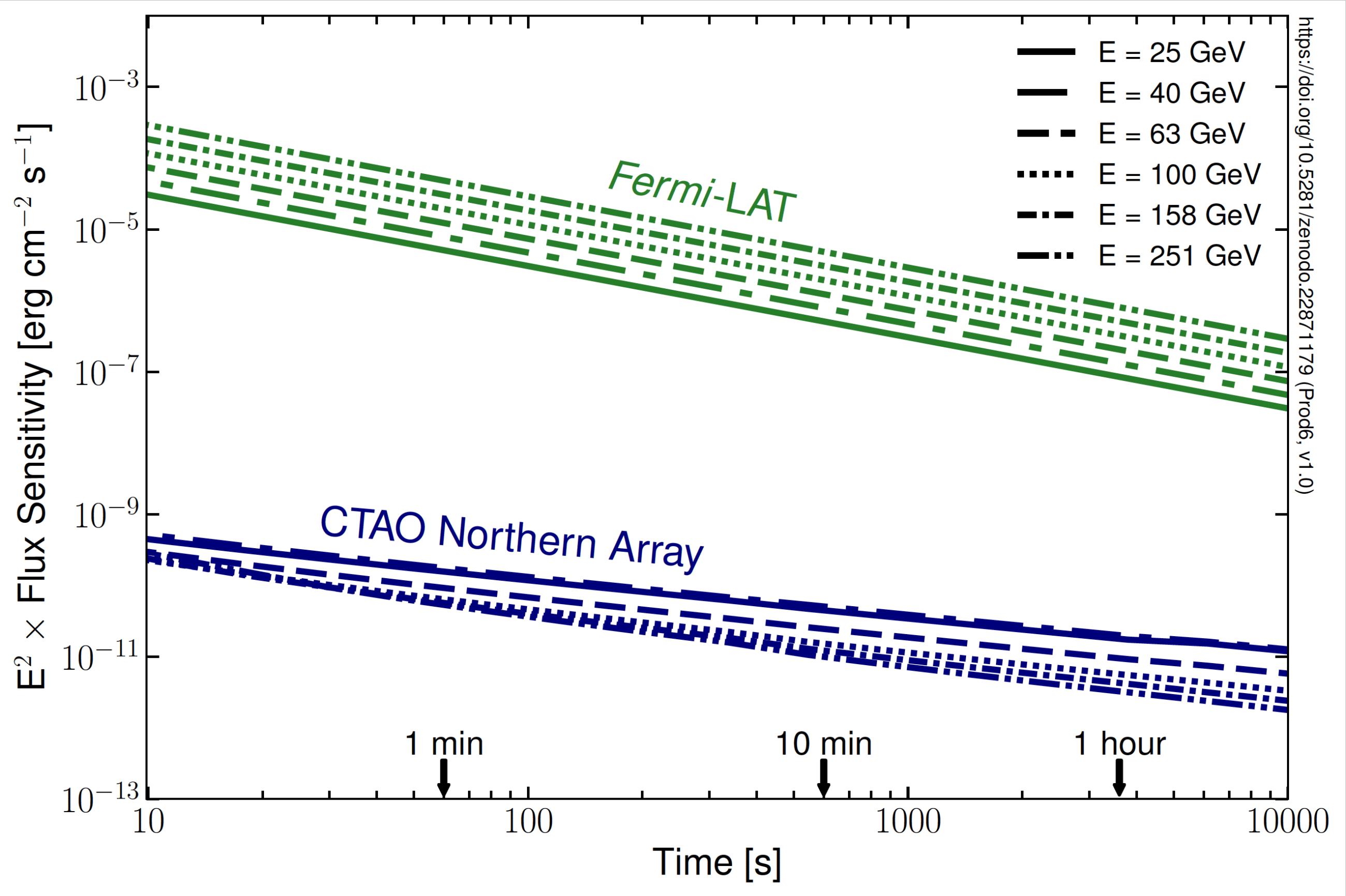
CTAO-North
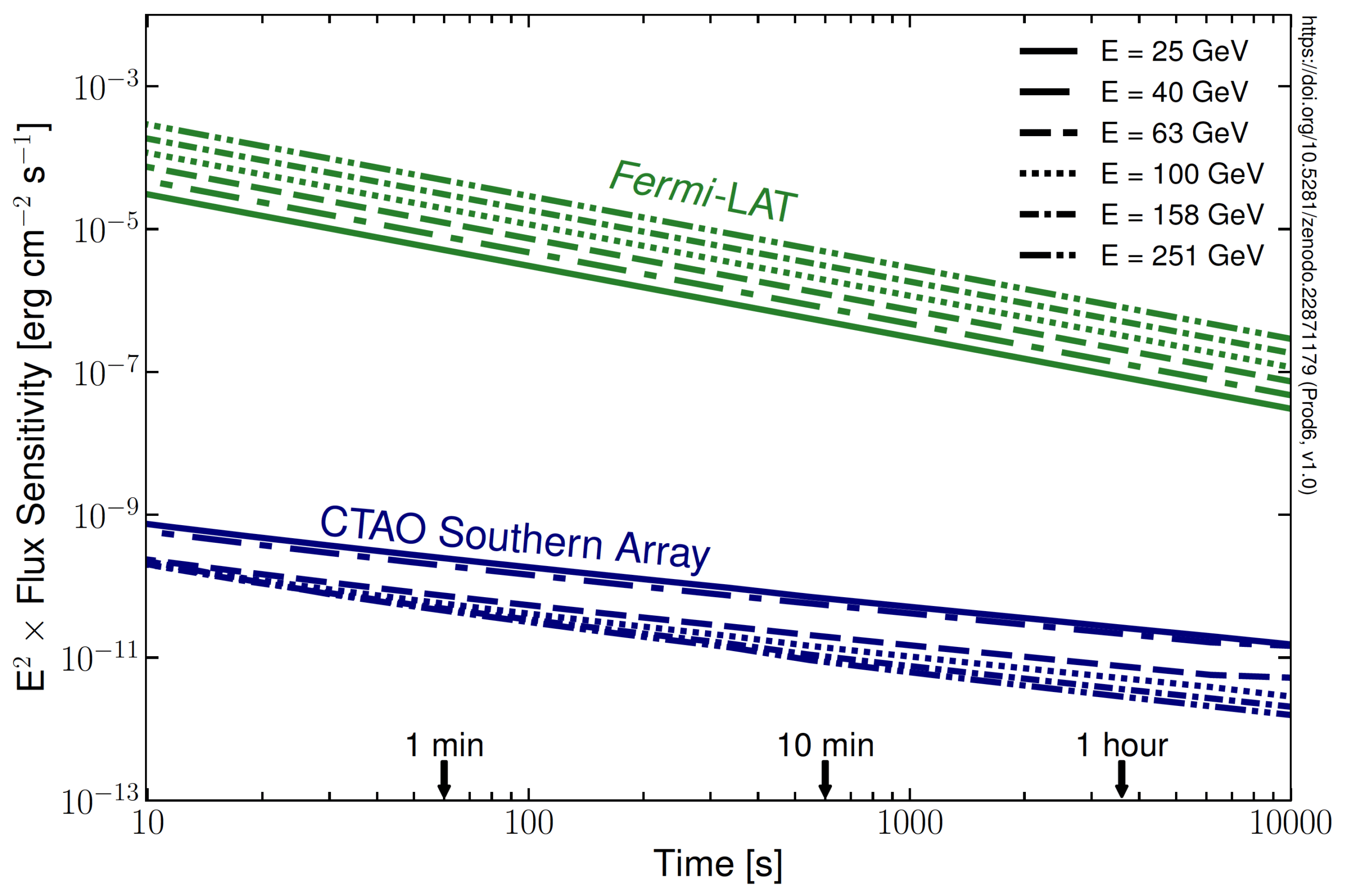
CTAO-South
The angular resolution at a zenith angle of 20 degrees is defined as the angle within which 68% of reconstructed gamma rays are contained relative to their true direction, shown here as a function of true energy. Gamma-hadron separation cuts are applied for the MC events used to determine the angular resolution. Dedicated analysis cuts can provide improved angular (or spectral) resolution at the expense of collection area, enabling e.g., a better study of the morphology or spectral characteristics of bright sources.
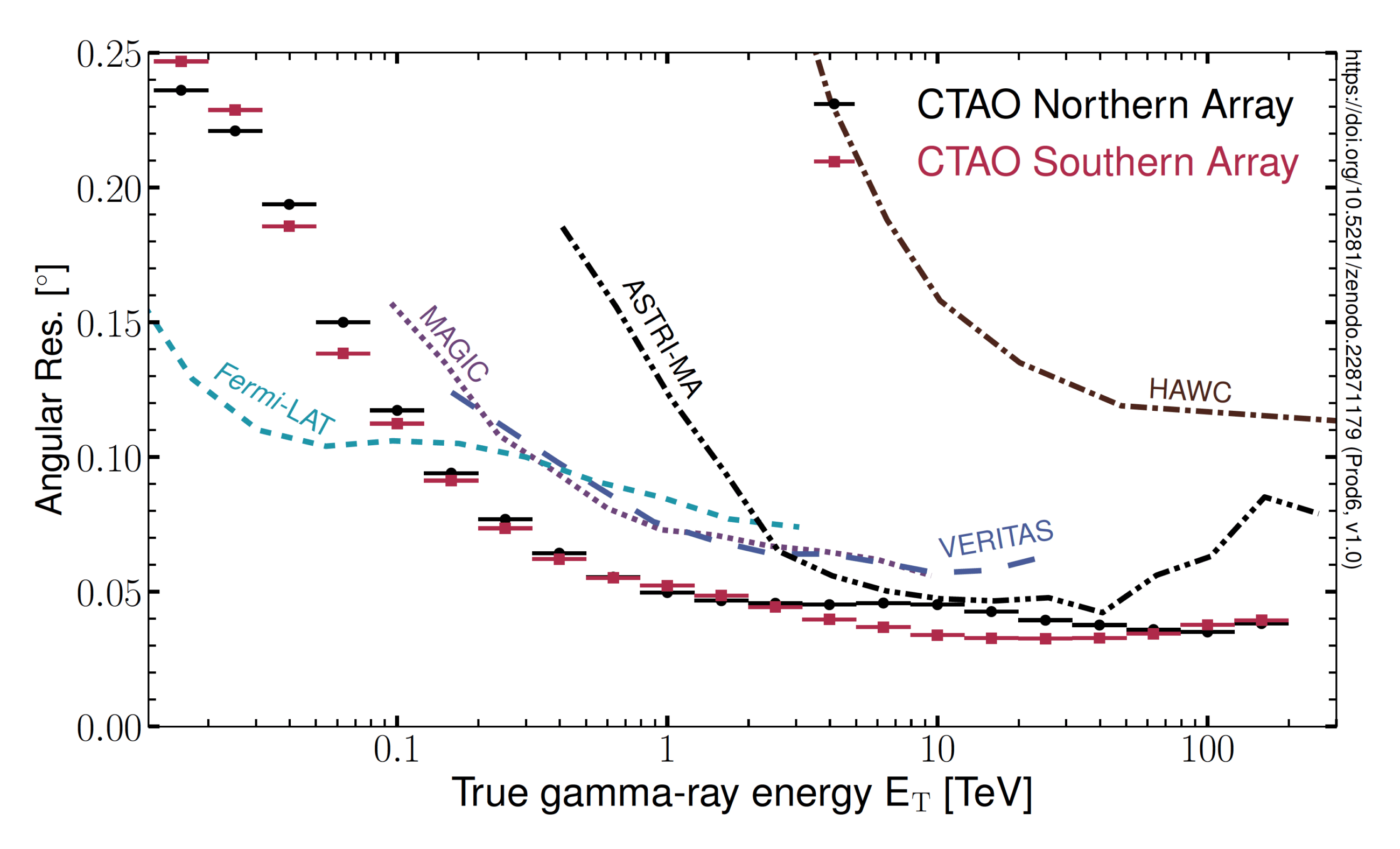
CTAO Arrays Comparison
The energy resolution at a zenith angle of 20 degrees, ΔE / E is obtained from the distribution of (ER – ET) / ET, where R and T refer to the reconstructed and true energies of gamma-ray events recorded by CTAO. ΔE/E is the half-width of the interval around 0 which contains 68% of the distribution. The plot shows the energy resolution as a function of reconstructed energy (the result depends only weakly on the assumed gamma-ray spectrum; for the results here we use dNɣ/dE ~E-2.62).
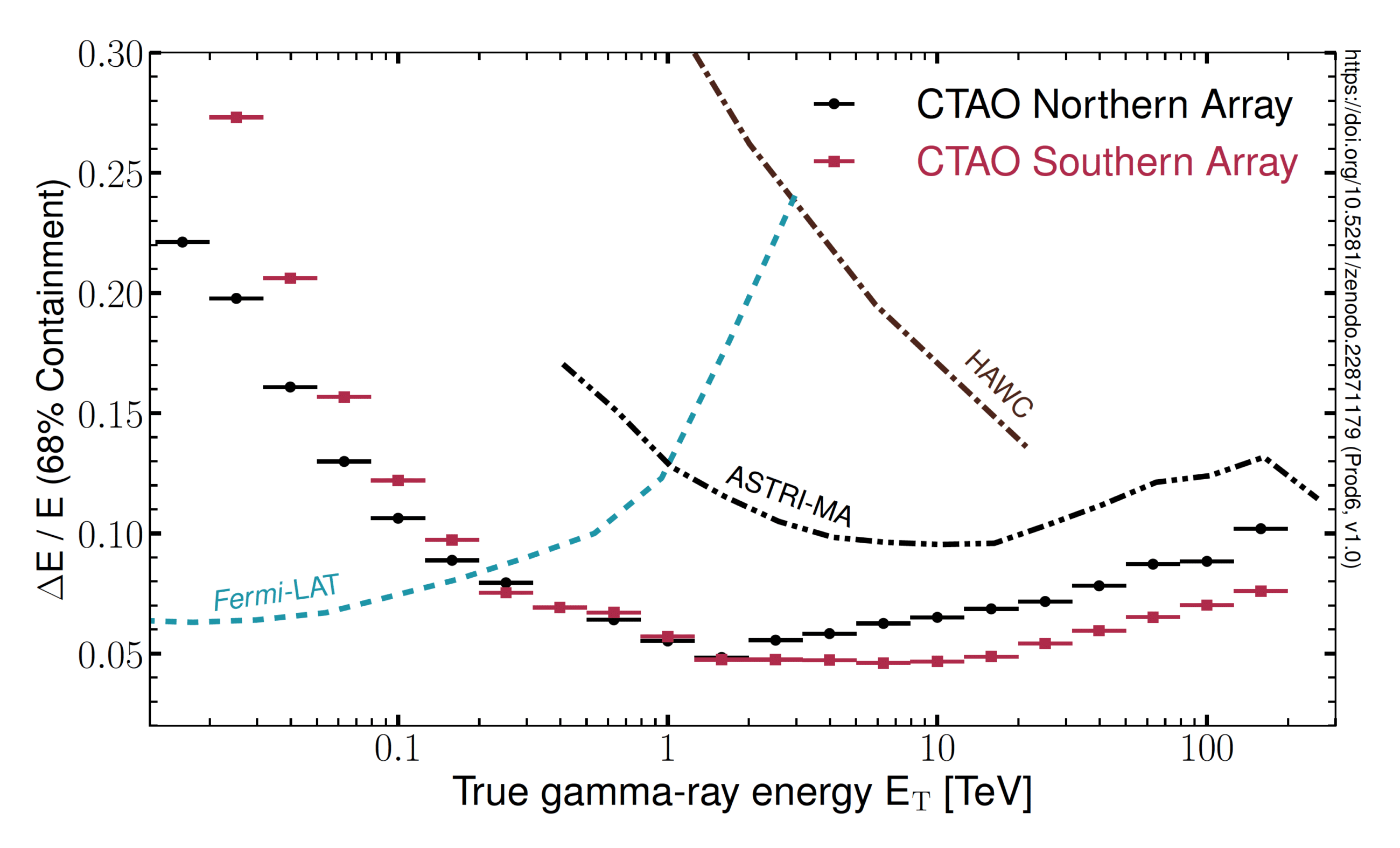
CTAO Arrays Comparison
The effective collection area for gamma rays from a point-like source at a zenith angle of 20 degrees is shown below vs. ET for gamma/hadron cuts optimised for 0.5-, 5- and 50-h observations (no cut in the reconstructed event direction applied):
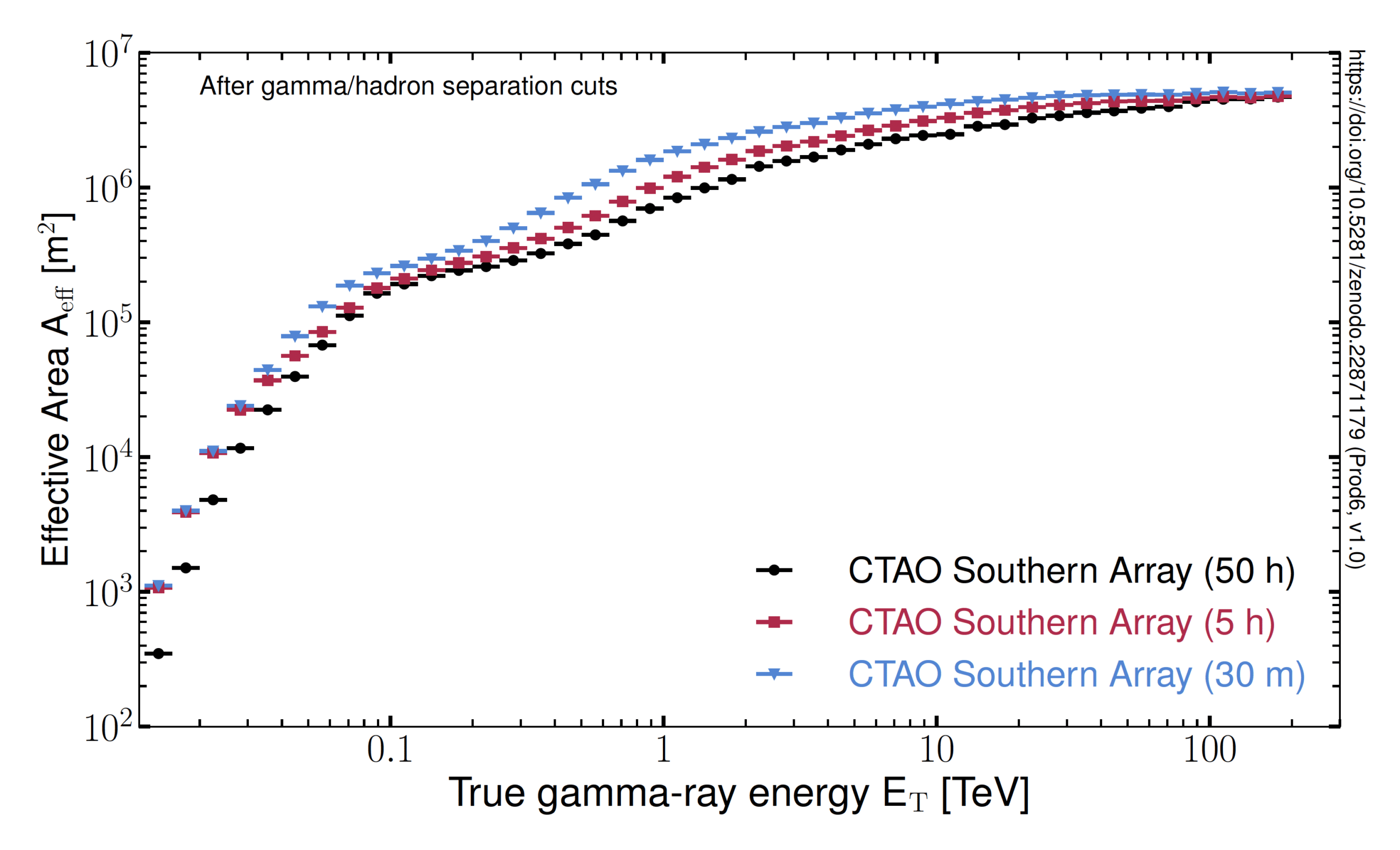
CTAO-South Array
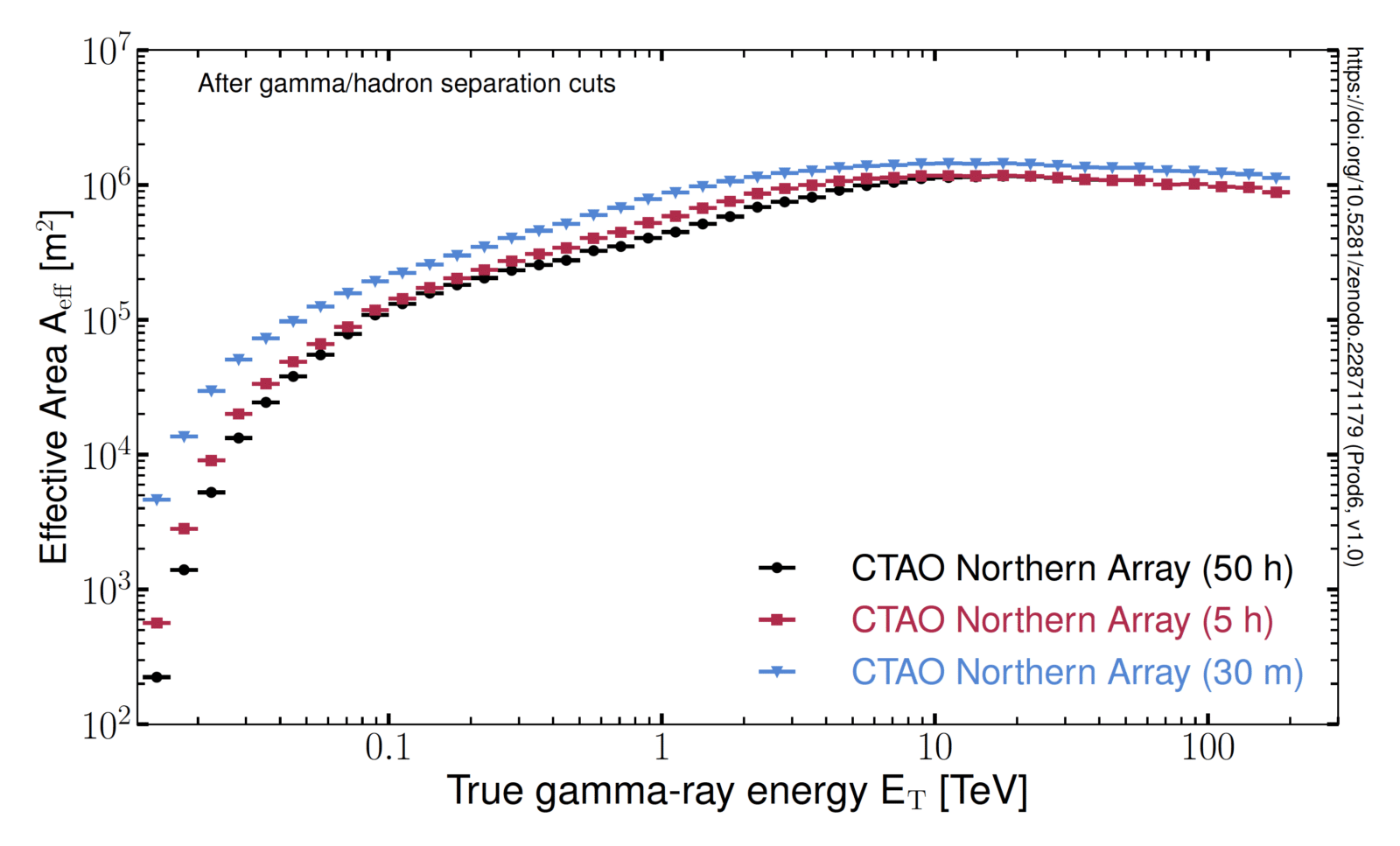
CTAO-North Array
The effective collection area with cuts in the reconstructed event direction:
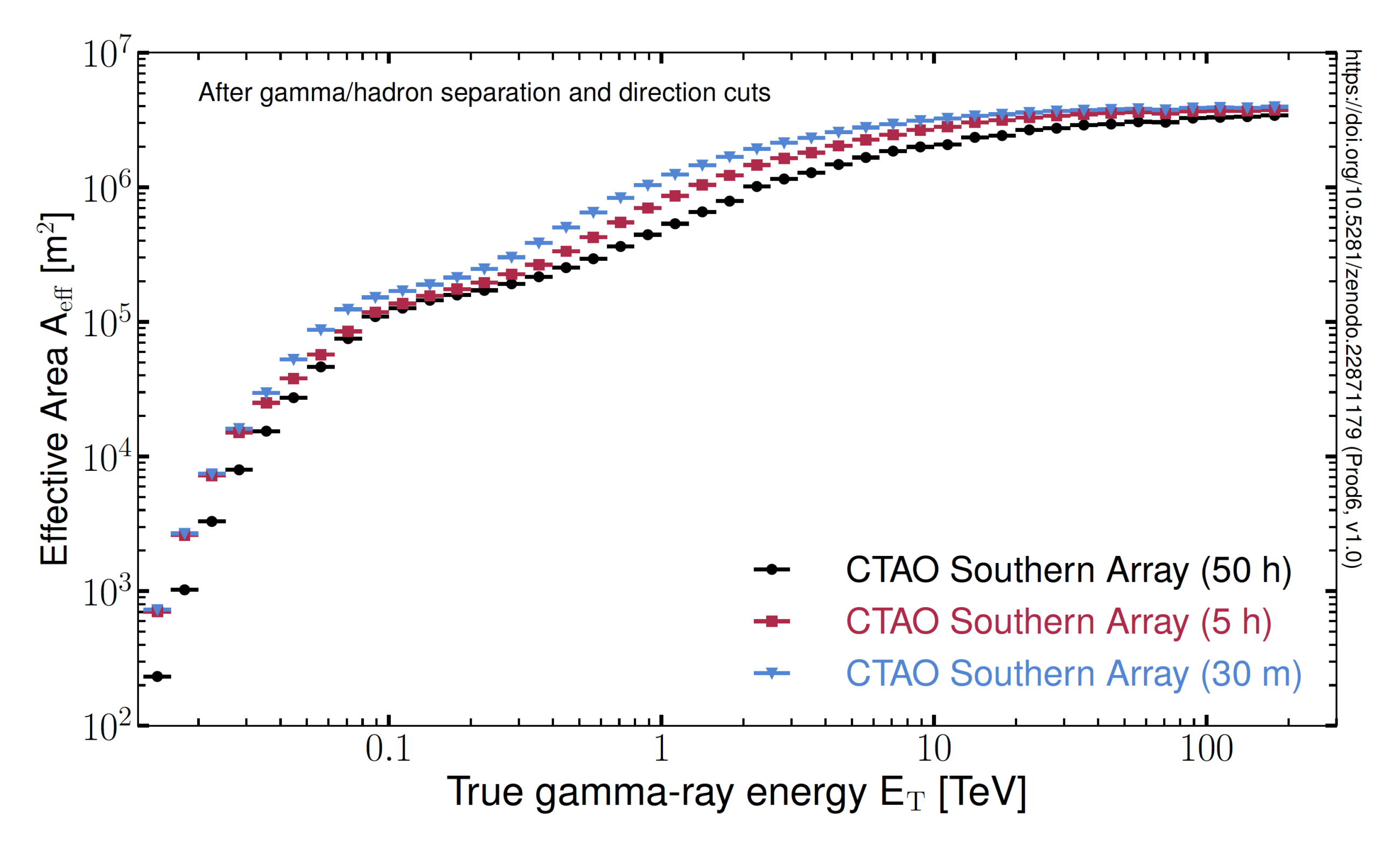
CTAO-South Array
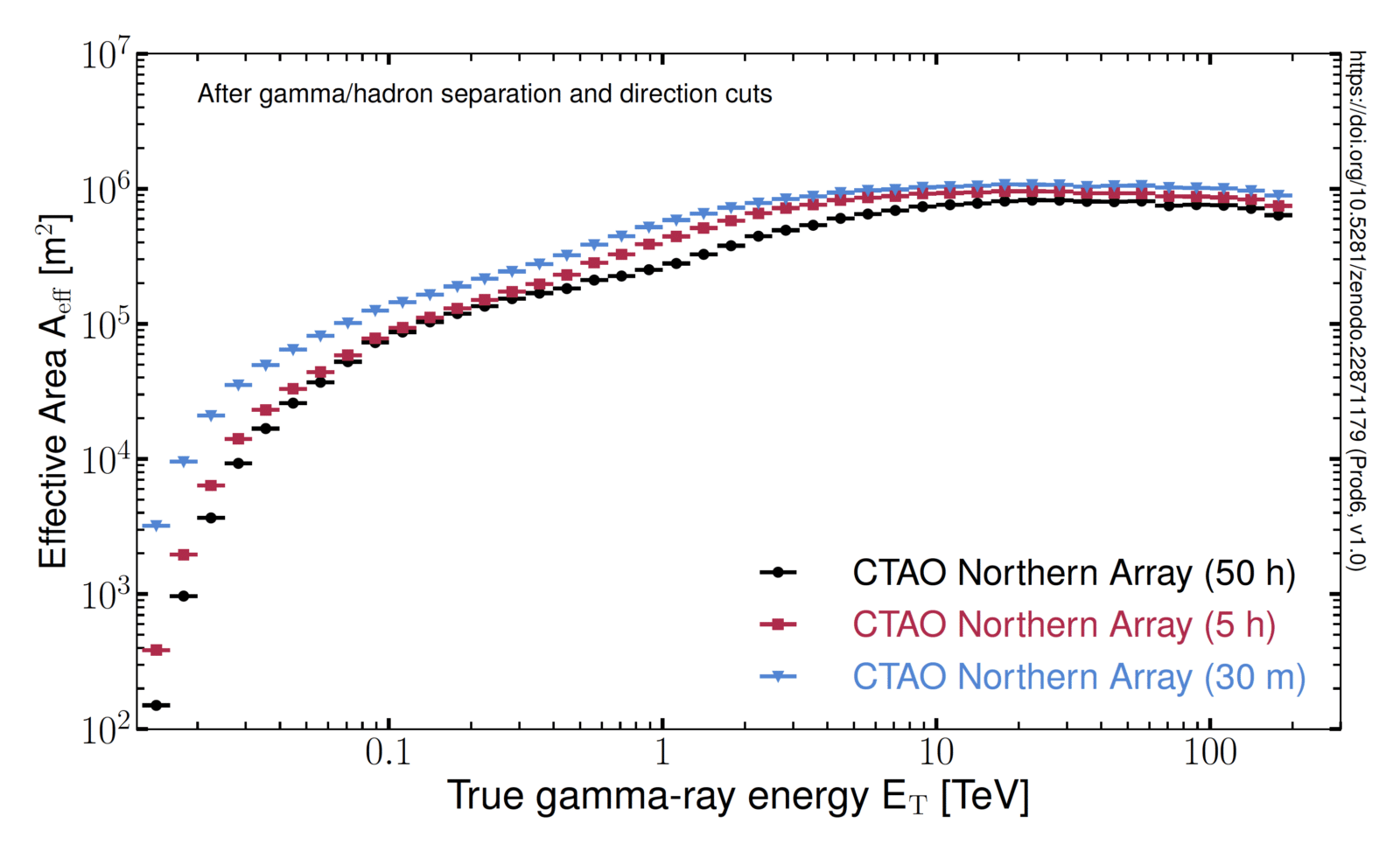
CTAO-North Array
The (post-analysis) residual cosmic-ray background rate per square degree at a zenith angle of 20 is shown below as a function of the reconstructed gamma-ray energy ER.
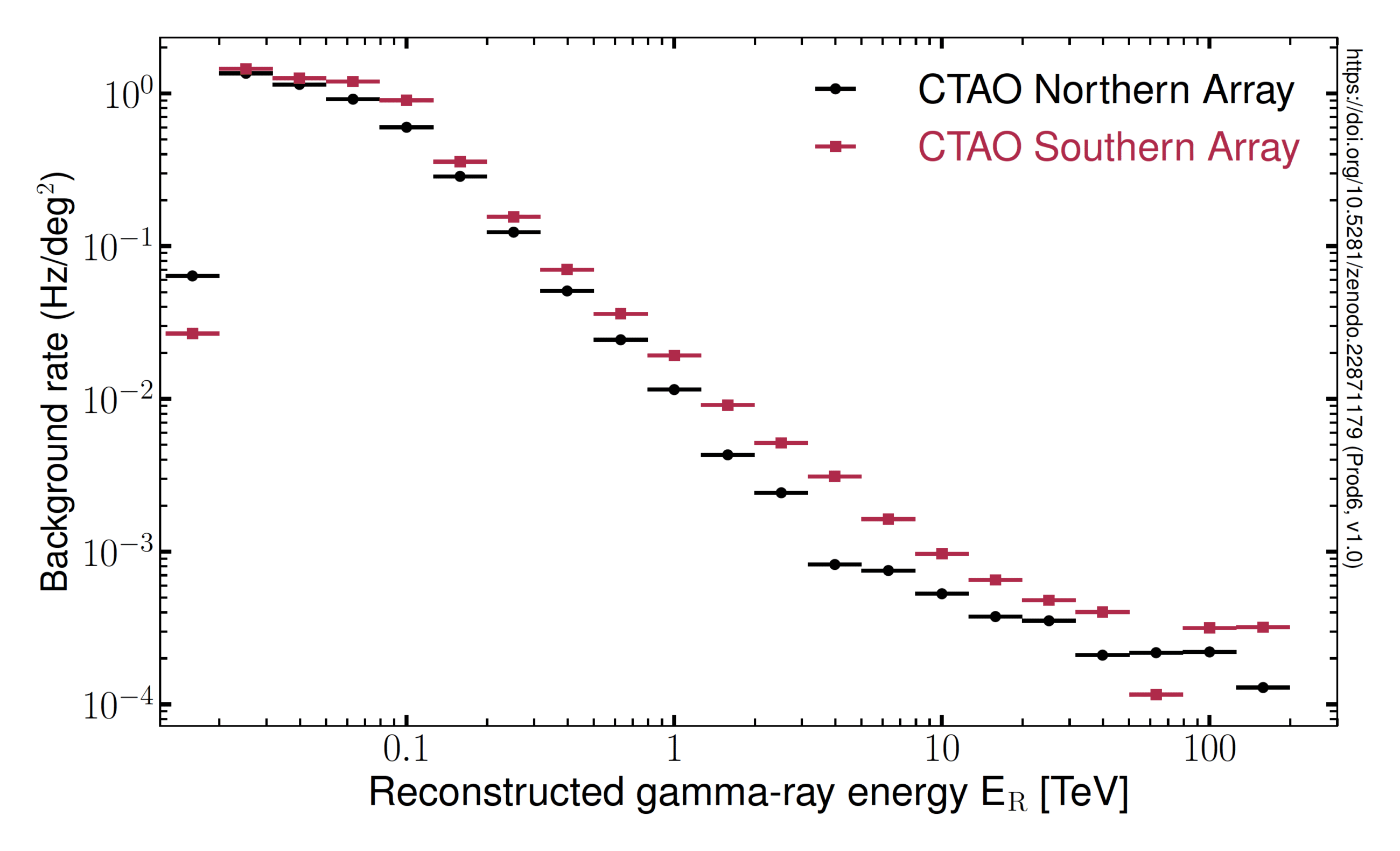
CTAO Arrays Comparison
The rate is the one integrated in 0.2-decade-wide bins in estimated energy (i.e., five bins per decade). Gamma-hadron separation cuts optimised for different observing times are applied to the selection of simulated cosmic-ray proton and electron events.
For details on the assumed cosmic-ray proton and electron spectra, see Bernlöhr et al 2013.
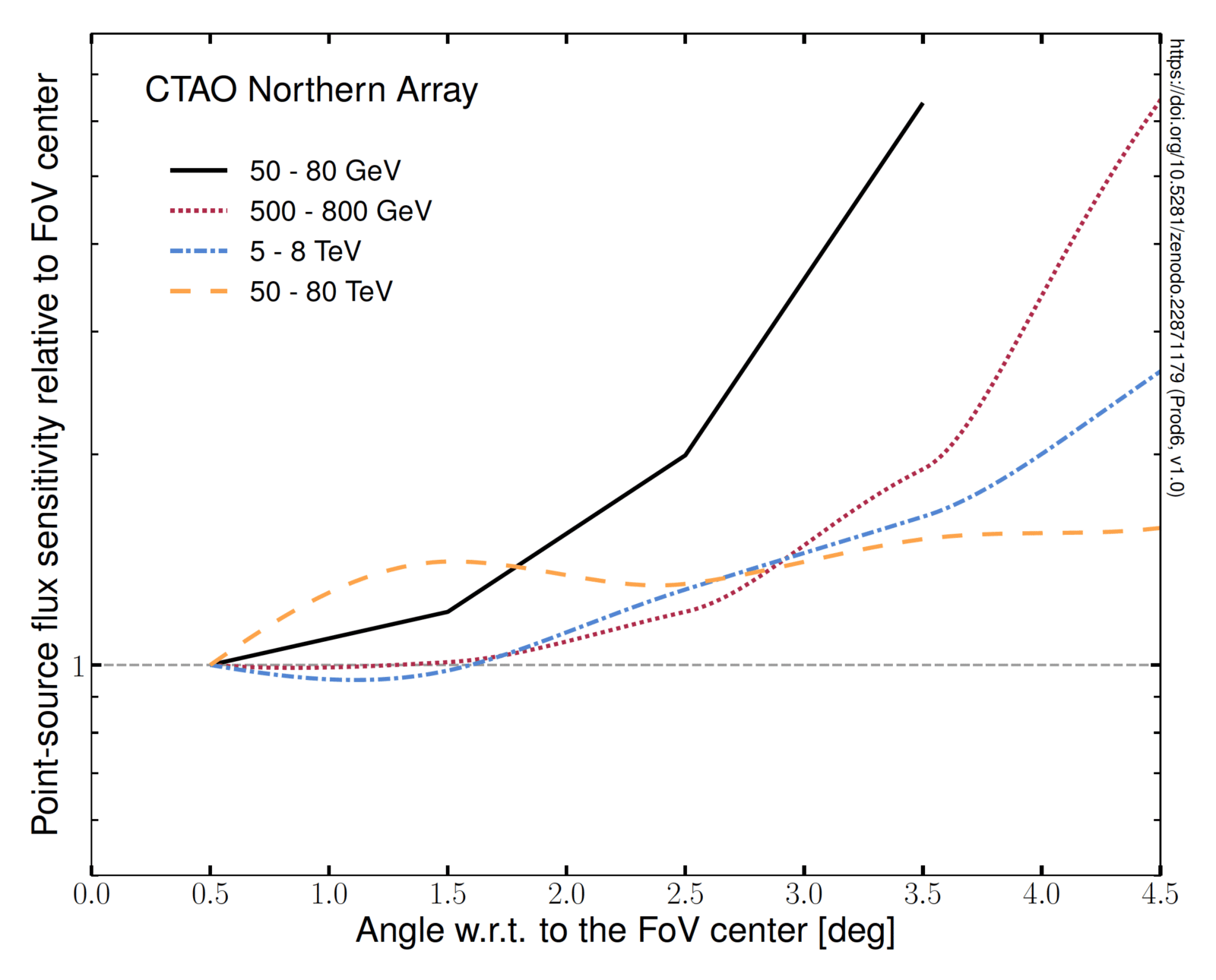
All performance parameters presented above are derived for observations at a zenith angle of 20 degrees and for a source located close to the centre of the CTAO field of view (FoV). The differential sensitivity curves for a point-like source at increasing angular distances from the centre of the FoV are shown below.
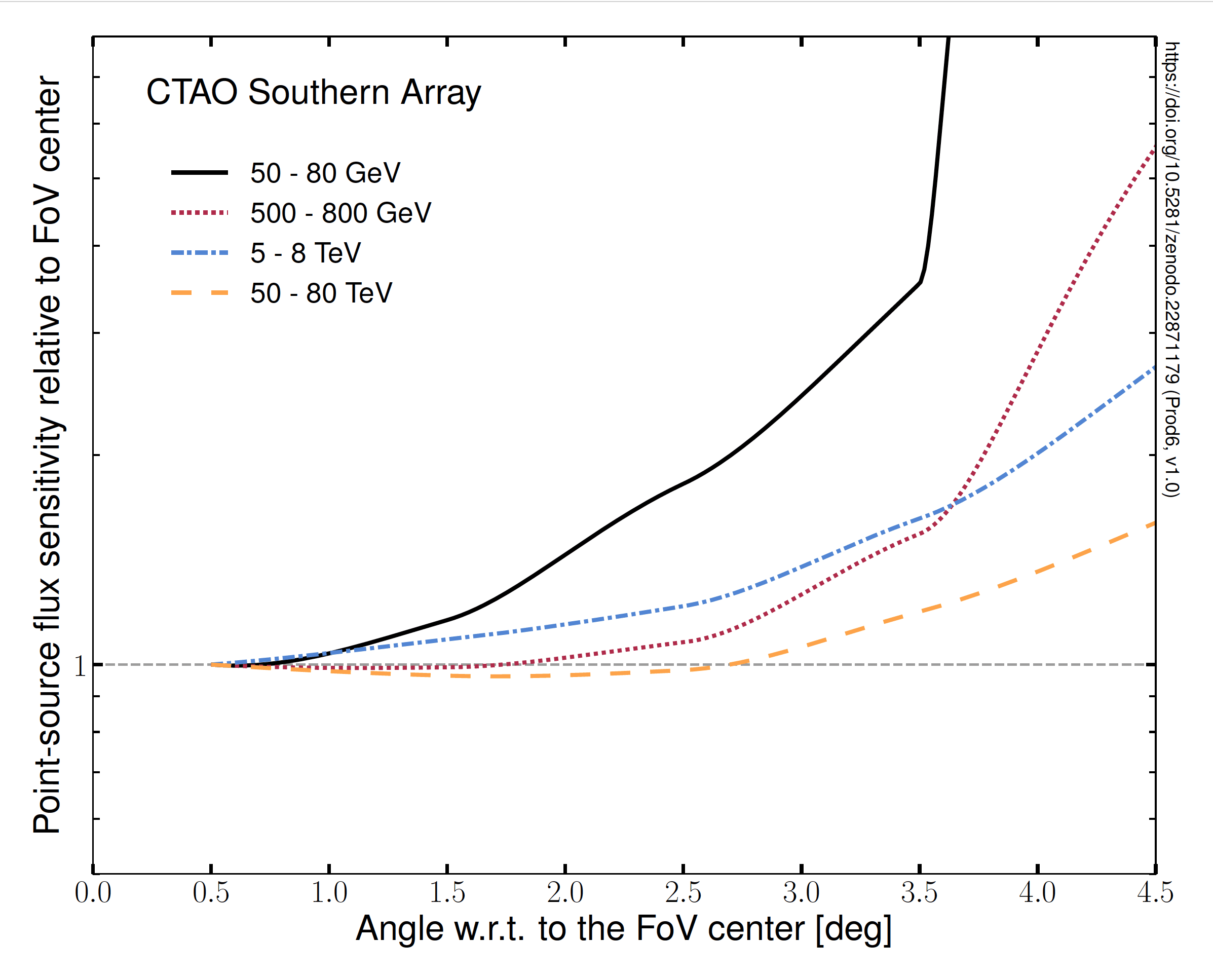
CTAO-South Array
CTAO-North Array
Angular and energy resolution also degrade as one approaches the edge of the FoV. The provided IRFs contain the evolution of all performance parameters with off-axis angle.
Source Files
The instrument response functions (IRFs) from which the plots on this page are derived can be downloaded in the following link.
Notes
- All performance values are derived from detailed Monte Carlo (MC) simulations. The MC simulations are similar to the ones presented in Bernlöhr et al 2013, but using CORSIKA 7.750 (with URQMD + QGSJET-II-04).
- The detector model of the CTAO telescopes used in the simulations is provided in https://zenodo.org/records/14198379.
- Eventdisplay v5.17.0, including the Eventdisplay-ML v1.0.0 stereo-reconstruction step was used for reconstruction and response generation.
- All performance values shown here refer to the first construction phase with an array configuration of 4 LSTs and 9 MSTs in the northern site (CTAO-North), and 2 LSTs, 14 MSTs, and 37 SSTs in the southern site (CTAO-South), named “Beta Configuration.”
- In the past, performance for the “Omega Configuration,” formerly referred to as the baseline configuration with 118 telescopes divided into both sites, was provided (the so-called ‘Prod 3b’, archived and available here). The “Omega Configuration” refers to the originaly planned configuration. The “Beta Configuration” is the current official configuration and is not a subset of the “Omega Configuration” in terms of telescope positions.
Other Instrument IRF Sources
- ASTRI: https://pos.sissa.it/395/884/pdf
- Fermi-LAT: public specifications (Pass 8 Release 3 Version 3) webpage http://www.slac.stanford.edu/exp/glast/groups/canda/lat_Performance.htm
- HAWC: arXiv:1701.01778
- H.E.S.S.: Preliminary sensitivity curves for H.E.S.S.-I (stereo reconstruction), based on/adapted from Holler et. al 2015 (Proceedings of the 34th ICRC)
- MAGIC: Public MAGIC Performance webpage https://magic.mpp.mpg.de/newcomers/magic-team/technical-implementation0/
- LHAASO: https://arxiv.org/abs/1905.02773
- VERITAS: public specifications webpage https://veritas.sao.arizona.edu/about-veritas/veritas-specifications
- LACT: LACT sensitivity curve for 32 telescope array at 20 degree zenith angle, obtained from ICRC 2025 contribution.
Computing Acknowledgements
We thank the following computing centres for providing the computational resources used to generate the simulations and analyses underlying the plots above.:
DESY-ZN, Deutsches Elektronen-Synchrotron, Standort Zeuthen, Germany
INFN/INAF-FRASCATI, Frascati, Italy
PIC, port d’informacio cientifica, Bellaterra, Spain
Swiss National Supercomputing Centre (CSCS), Lugano, Switzerland